
You empty the boxes, dismantle the shelves, and at the moment you unscrew a bulb from the ceiling light, doubt sets in. This LED bulb purchased two years ago, does it go with you or does it stay? The answer depends on your status (selling owner or outgoing tenant) and the type of installation concerned. Misjudging this detail can create a dispute during the inventory or the signing of the sales agreement.
Bulb, socket, light fixture: the legal distinction that settles the debate
Before knowing what to take, you need to understand what French law considers as movable property and what it associates with the building. The bulb is a consumable, classified as movable property. It belongs to you just like a battery or a range hood filter.
Further reading : Archive or delete an Amazon order: which solution to protect your privacy?
The socket, the built-in wiring, and the light fixture fixed to the wall or ceiling fall into another category. They are part of the building by destination. In other words, anything that is screwed, sealed, or embedded in the structure of the home must remain in place.
As the website 100 000 Watts reminds us, this boundary between movable and immovable property determines what you can legally take with you when moving. Removing a socket or a recessed spotlight without the buyer’s or landlord’s agreement exposes you to a claim.
You may also like : Everything You Need to Know About Mortgage Costs and Fees Before Signing Your Home Loan
Let’s take a concrete example. You installed a chandelier in the living room by drilling the ceiling and connecting the wires. This chandelier has become an element of the building. You cannot take it down without notifying the buyer or the owner, and without replacing it with another light fixture. The bulb that is in it, however, can go in your box.
Outgoing tenant: what the decree imposes on bulbs
Decree No. 87-712 of August 26, 1987 lists the repairs that are the tenant’s responsibility. The replacement of bulbs is explicitly mentioned as part of the regular maintenance of the housing.
A tenant who returns the premises with burnt out or missing bulbs risks a deduction from the security deposit. The landlord may consider that the maintenance obligation has not been met and charge for the replacement.
Have you checked the entry inventory on this point? If functional bulbs were mentioned upon your arrival, you must return the property in a comparable state. This does not mean you have to leave your high-end LED bulbs. You can replace them with new entry-level bulbs, as long as they work and match the installed socket.
Here are the points to check before returning the keys:
- Compare the entry inventory with the current state: each light point mentioned must have a functional bulb
- Check that the sockets and switches have not been damaged during the removal of the bulbs
- Replace any bulb taken with a compatible model for the existing socket (E27, E14, GU10 depending on the fixtures)
Real estate sale: what the seller can take
In the case of selling a property, the rule is different. The seller can take their bulbs without prior agreement from the buyer, since they are classified as movable property. In practice, most sellers leave them out of courtesy or forgetfulness.
The trap lies elsewhere. Many sellers remove wall sconces, recessed spotlights, or designer pendants thinking they are personal items. If these elements are fixed to the structure of the building, they are part of the sale unless otherwise stated in the deed.
Any fixed light fixture must be listed in the sales agreement if it is not included. The notary can include a clause specifying which equipment the seller wishes to keep. Without this clause, the buyer has the right to demand reinstatement or financial compensation.
What to anticipate before signing:
- List all the light fixtures you wish to take and inform your notary before drafting the deed
- Provide a replacement light fixture for each lighting point you remove, to avoid leaving exposed wires
- Photograph the state of the installations before and after removal to prevent any disputes
Used bulbs and moving: do not throw them away anywhere
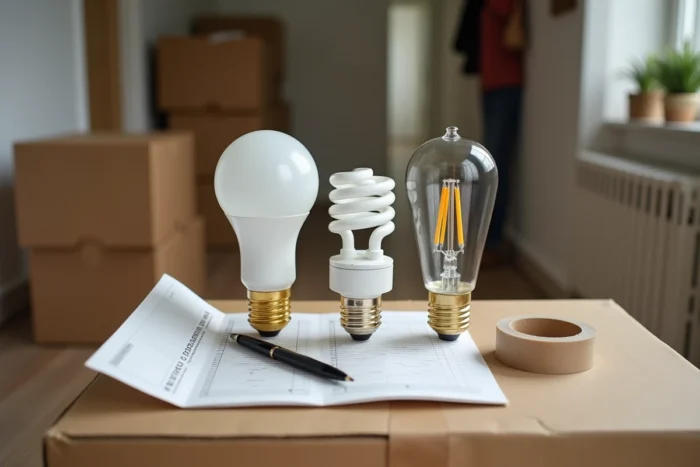
A move often generates forced sorting. You find burnt-out bulbs in a drawer, fluorescent tubes stored in the garage. The temptation to throw everything in the regular collection bin is strong, but LED and compact fluorescent bulbs are classified as electrical equipment waste that requires specific treatment.
Classic filament bulbs (incandescent or halogen) can go in the household waste bin, as they do not contain recyclable electronic components. LEDs, compact fluorescents, and neon tubes, on the other hand, must be disposed of in dedicated collection bins, available in most supermarkets and recycling centers.
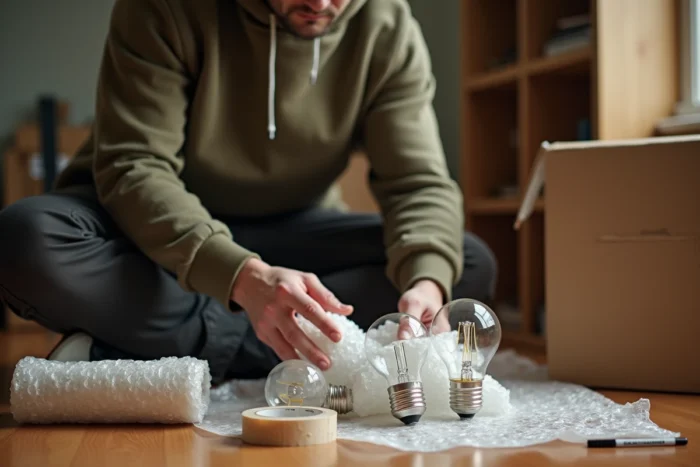
If you transport functional bulbs to your new home, protect them individually with newspaper or bubble wrap. A broken LED bulb in a box can release small electronic components that are difficult to recover. Packing each bulb separately prevents breakage and facilitates sorting upon arrival.
The most useful reflex when moving is to sort your bulbs into three categories: those that go with you (functional, compatible with the new home), those that stay in place (to respect the inventory or the sales agreement), and those that go for recycling (burnt out or obsolete). This sorting takes a few minutes and saves you from making trips to the recycling center after moving in.