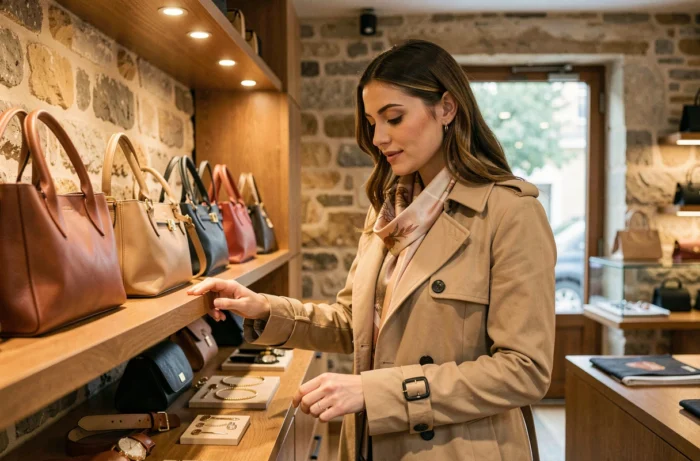
A poorly chosen accessory sabotages a carefully constructed outfit. The difference between a flat look and a readable silhouette often comes down to two or three pieces whose material, proportion, and finish have been thoughtfully considered in advance. Here, we discuss the technical criteria that allow for the selection of durable accessories that are consistent with a daily wardrobe.
Traceability and digital passport: what’s changing for fashion accessories
The ESPR regulation has mandated since July 2026 that large companies in the EU are prohibited from destroying unsold clothing, accessories, and shoes. They must document and publish their stock management practices. This regulatory framework directly alters the available offerings in stores and online.
Accessories are among the priority categories for the deployment of the product digital passport. This system provides information on the composition, supply chain traceability, reparability, and authentication of each piece. For consumers, this means direct access to manufacturing information before purchase.
Traceability is becoming a practical condition for market access, influenced by combined European requirements and compliance expectations from distributors. We recommend checking for the presence of a traceability identifier or a detailed material sheet before any purchase, particularly on the Boulevard Mode website and its accessories, which features documented pieces.

Materials and finishes: technical criteria for durable accessories
The choice of an accessory primarily depends on the quality of the material. Full-grain leather tanned with vegetable methods ages better than coated leather or synthetic leather but requires regular maintenance. Natural fibers (linen, combed cotton, merino wool) offer better longevity than blends with a high synthetic proportion for scarves and shawls.
Jewelry: alloys and coatings to watch
A PVD coating significantly outlasts a traditional galvanic plating. Jewelry made from 316L stainless steel or 925 silver retains its appearance without rapid tarnishing, unlike zinc-based alloys sold in mass retail. For earrings, titanium posts remain the reference for reactive skin.
Bags and leather goods: control points
- Leather stitching (two needles, waxed thread) ensures the strength of handles and joints, where a simple machine stitch may fail under repeated tension.
- High-quality solid brass or zamac clasps withstand thousands of opening cycles, while metallic plastic clasps break within months.
- Cotton or linen linings breathe better than polyester linings, which limits odors and internal wear of the bag.
These technical details are not always included on product sheets. We observe that brands engaged in a traceability approach document these specifications more thoroughly, a reflex to encourage.
Sunglasses and watches: beyond the trend
Sunglasses are the most visible accessory on the face. The shape of the frame should balance the proportions of the face rather than accentuate them. A rectangular frame structures a round face, while a round shape softens angular features.
The UV filtration category matters more than the tint of the lens. A category 3 lens covers most outdoor uses in temperate climates. Polarized lenses eliminate reflections on flat surfaces (water, road), making them a relevant choice for driving and seaside activities.
Watches: readability and versatility
A case between 36 and 40 mm suits most wrists without overwhelming the proportions. Interchangeable straps (quick-release system) allow switching from a leather strap to a NATO strap in seconds, adapting the watch to the context without multiplying pieces.
A watch with a simple dial can be worn from the office to the weekend without a stylistic mismatch. Complications (chronograph, GMT) add thickness to the case, which can unbalance a fitted outfit.
Belts and scarves: accessories that structure the silhouette
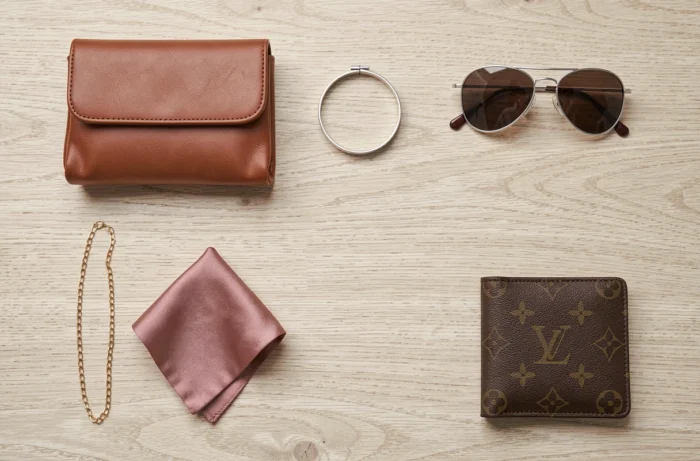
The belt marks the waist and visually segments the torso and legs. A width of 3 to 3.5 cm fits most pant loops, from chinos to raw jeans. Wider belts work on dresses or high-waisted styles but do not fit standard loops.
A brushed metal buckle integrates more easily than a shiny buckle into a daily wardrobe. The tone of the buckle should be consistent with other metals worn (watch, jewelry), without the need for a perfect match.
Scarves and shawls: material and format
A silk twill scarf (approximately 90 x 90 cm) can be tied around the neck, wrist, or bag. Silk twill holds knots better than satin, which slips. For cold seasons, a merino wool scarf with a sufficiently dense weight insulates without adding excessive volume around the neck.
- Mixed cashmere (70/30 cashmere/silk) offers a good compromise between warmth, lightness, and resistance to pilling.
- Neutral colors (navy, heather gray, camel) pair well with most coats and jackets.
- A scarf with a discreet geometric or floral pattern adds character without imposing a strong style on the entire outfit.
The move towards circularity also concerns these textile pieces. Resale, repair, and donation are gradually replacing the destruction of unsold items under the influence of the European regulatory framework. Choosing a repairable and traceable accessory extends its usage duration and reduces its cost per wear, a calculation that savvy buyers now incorporate into their decision-making.