
A lease that ends on the 14th of the month, an elevator reserved for a two-hour slot, an electric meter to be opened before the fridge arrives: moving is all about operational details that most generic lists do not cover. Organizing a stress-free move is primarily about sequencing the right actions at the right times, not just checking boxes.
Cost of renting a van: the day and time make all the difference
We first think about the volume of the truck, rarely about the reservation slot. The high season is concentrated in June, July, and early September, with peak demand on Saturdays driving rental prices up by about 40% compared to mid-week. Booking on a Tuesday or Wednesday, in the middle of the month, reduces costs and ensures vehicle availability.
Read also : Trends and Tips for Organizing an Unforgettable Wedding This Year
For heavy moves (large furniture, piano, built-in appliances), you can consult the moving page of Cœur Artisan to assess the services suited for this type of load.
The choice of truck size also deserves a realistic calculation. A van that is too small requires two trips, which doubles travel time and fatigue. It’s better to overestimate the volume by a notch than to find yourself cramming boxes into the back seat.
See also : Essential Steps for Successfully Conducting a Network Security Audit in a Business
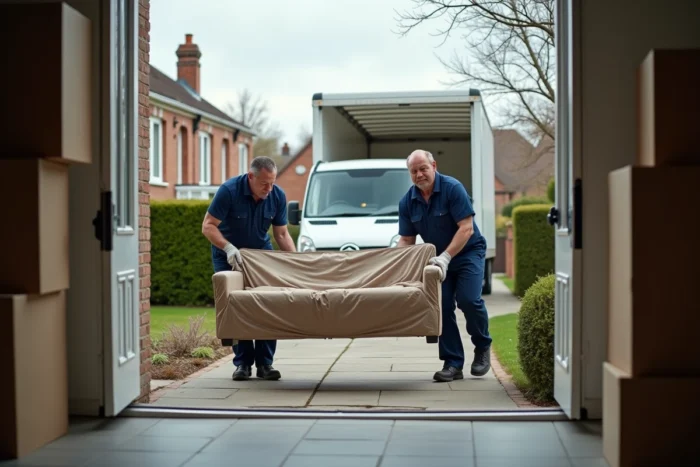
Pack boxes by area, not by category of items
The classic method is to group items by type: dishes together, books together, clothes together. In practice, this logic slows down unpacking because a single “dishes” box must go through the kitchen, then a “books” box through the living room, and then a “decor” box through the bedroom.
Packing room by room speeds up settling into the new home. You fill a box with everything from the bathroom (towels, products, laundry basket), label it “BATH,” and it goes straight to the right room upon arrival. Movers or friends carrying it no longer need to ask where to place each box.
Labeling: what really works
A thick marker on two sides of the box is sufficient. Note the destination room and a keyword about the contents (“BATH – pharmacy,” “Kitchen – spices and small appliances”). Color coding with stickers also works, as long as everyone knows the legend.
- Indicate “FRAGILE” and “TOP” on boxes containing dishes or electronics, on at least two visible sides
- Number the boxes and keep a quick list on your phone (box 12 = office, cables and chargers) to find a specific item without opening everything
- Keep a separate “first night” box with sheets, chargers, coffee maker, toilet paper, and toiletries
Energy transfer and home insurance: the steps that block installation
The time required to open an electric or gas meter is often underestimated. If the property has been vacant for several weeks, the activation may require a technician’s visit, with a timeframe that varies depending on the provider and the period. Starting the subscription at least two weeks before the move-in date avoids spending the first night without hot water or cooking plates.
Home insurance must be active from the moment the keys are handed over. Many landlords and agencies require the certificate on the day of the entry inventory. Any damage (water damage, glass breakage) occurring between the signing of the lease and the insurance subscription remains the tenant’s responsibility.
Checklist of steps to complete before moving day
- Cancel or transfer the energy contract from the old home and subscribe to the new one (electricity, gas, possibly water if there is an individual meter)
- Subscribe to home insurance and obtain the certificate before the inventory
- Change your address in bulk via the online service of La Poste and notify the bank, employer, social security, and mutual insurance
- Request the opening of the internet line at the new home (the average activation time often exceeds a week)

Protect furniture and fragile items during transport
Moving blankets protect furniture better than bubble wrap, which slips on smooth surfaces. Wrap the corners of dressers, table tops, and mirrors with blankets secured by wide tape. Screws and small assembly parts should be stored in a zip bag taped directly to the furniture, which avoids frantic searching during reassembly.
For screens (TV, monitor), the original box remains the best protection. If you no longer have it, two rigid cardboard sheets secured on either side and wrapped in stretch film will do the trick. Opinions vary on this point, but laying the screen flat in the truck rather than standing up limits the risk of cracks due to vibrations.
The first days in the new home: prioritize the living space
Unpacking everything on the same day is tempting but unrealistic. You gain comfort by focusing first on three areas: the bedroom (bed set up, sheets laid), the kitchen (coffee maker, a few plates, enough to cook a simple meal), and the bathroom (towels, soap, shower curtain).
Setting up these three areas as a priority makes the home livable from the first night. The rest (decorating, organizing the garage, arranging closets) can wait several days without affecting daily life.
One last often-overlooked point: check the condition of the faucet seals and water pressure as soon as you move in. A defective seal noted during the inventory is the landlord’s responsibility. Discovered three weeks later, it becomes more complicated to address. Taking ten minutes to turn on each faucet, flush each toilet, and test each electrical outlet remains the most cost-effective reflex on the first day.