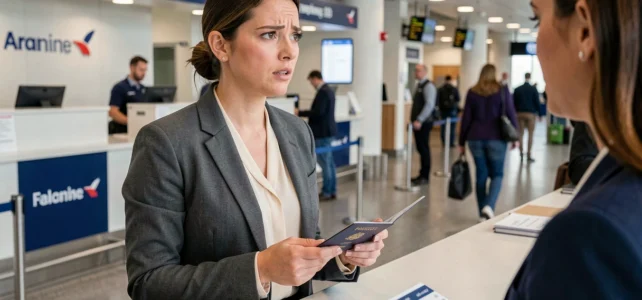
Your plane ticket displays your married name, but your passport lists your maiden name first. At boarding, the agent compares the two documents. If the names do not match, the boarding pass is denied. This discrepancy between the name used and the official name causes stressful situations every year, sometimes costly, for female travelers who thought they had correctly completed their reservation.
The MRZ area of the passport: what the scanner actually reads at boarding
Competitors often talk about “matching names,” without explaining the technical mechanism behind the check. Look at the bottom part of your passport: two lines of uppercase characters, separated by chevrons. This is the MRZ (Machine Readable Zone). It is this zone, and not the visual identity page, that the scanner reads as a priority.
See also : How to Choose the Ideal Equipment for Your Modern and Comfortable Home
On a French passport, the MRZ contains your maiden name. If your passport also mentions a married name (preceded by “ép.”), it appears on the visual identity page but not always in the MRZ. The airline system compares the name on the ticket with the MRZ. If you booked under your married name only, the scanner finds no match.
Understanding this technical detail changes everything. The name to indicate on the ticket is the one that appears in the MRZ of the passport, which is the maiden name in the vast majority of cases for French passports.
Further reading : How to Easily Access Municipal Orders Online: A Practical Guide
To know precisely what name to put on a plane ticket for a married woman, open your passport and read the two lines at the bottom before making any reservation.

Maiden name, married name, common name: three concepts to distinguish on a plane ticket
French law distinguishes between the maiden name (or “family name”), which never changes, and the common name, which is optional. After marriage, you can use your spouse’s name as a common name, but this does not constitute a change of civil status.
Passport and identity card do not present the name in the same way
On a French passport, the maiden name appears first. The married name may appear below, preceded by “ép.”. On a recent national identity card, the maiden name is also prioritized, but the common name may appear in a dedicated section.
The confusion arises from daily life. You sign your letters, contracts, and online accounts with your married name. When booking a flight, you naturally type this name. Airlines compare the ticket to the travel document, not to your habits.
Special case: passport with both names
If your passport includes both the maiden name and the married name on the identity page, some airlines accept either when booking. Others strictly require the name from the MRZ. The safest rule remains to book under the maiden name.
Name correction after booking: deadlines, fees, and limits according to airlines
Have you already booked under the wrong name? Don’t panic, but act quickly. Airlines have very variable policies regarding name corrections.
- Some airlines allow a minor correction for free (a few characters difference) if you contact them quickly after booking.
- Others charge modification fees that can reach a significant amount, especially if the request comes close to the departure date.
- Some airlines, particularly low-cost ones, consider a name change as a new booking and do not allow any corrections on the existing ticket.
A point often overlooked: if you booked through an online agency or a comparator, the modification goes first through the intermediary, not through the airline. This adds a delay and sometimes additional fees charged by the agency itself.
Always contact customer service by phone rather than through an online form. Name corrections related to marriage are treated as specific cases, and an agent may sometimes apply a more flexible policy than what the website displays.
Divorce and travel: a less visible documentary trap
The issue of the married name on the ticket is often approached from the angle of marriage. After a divorce, the situation becomes complicated differently. Article 264 of the Civil Code states that after divorce, each spouse loses the use of the other’s name, unless agreed otherwise or authorized by the judge.
If your passport still mentions your married name (because it was issued during the marriage and remains valid), but you are now booking under your maiden name, the reverse discrepancy occurs. After a divorce, renew your travel documents as soon as possible to avoid any inconsistencies.
Since the increase in document checks in recent years, airlines and border authorities are more systematically verifying the consistency between the name on the passport and the one used on the ticket. A French legal website recommends renewing documents within three months following a change in situation to prevent complications.
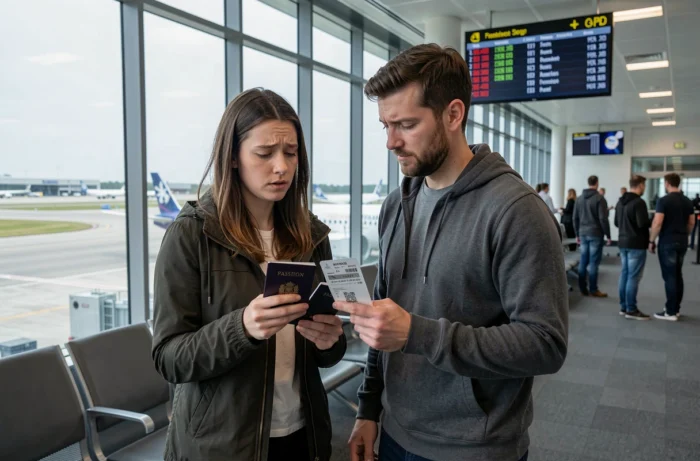
Checklist before booking: reflexes that avoid boarding denial
Rather than a list of generic advice, here are the concrete checks to make before finalizing a ticket purchase:
- Open your passport (or your identity card if you are traveling in Europe) and locate the exact name in the MRZ, at the bottom of the document.
- Copy this name letter by letter into the reservation form, without adding “ép.” or the married name if it does not appear in the MRZ.
- Check that the first name entered corresponds to the first name on the document, including if it is hyphenated.
- If you are traveling with a recently renewed passport after marriage or divorce, compare the new document with the old one to spot any name differences.
- Keep a digital copy of your identity document on your phone; it can facilitate a quick check at the counter in case of doubt.
The most reliable reflex remains to always book under the maiden name. It is the only name guaranteed to appear in the MRZ of any French passport, regardless of your marital status. By adopting this habit, you eliminate almost all risks of boarding denial related to name confusion.