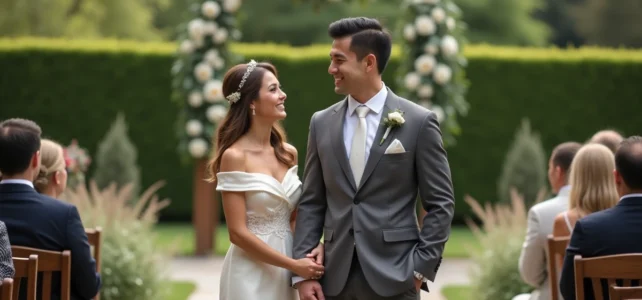
Organizing a wedding in 2026 means dealing with changed expectations. Couples want a celebration that reflects them, not a standardized reception. Three main themes emerge this year: more intimate formats, a central focus on the guests’ experience, and decoration choices that embrace a clear visual stance rather than accumulation.
Wedding Budget: Balancing Experience and Decor
Before choosing a venue or caterer, the first decision is about budget allocation. Do you prefer a spectacular decor or an evening that your guests will talk about for years? This choice influences everything else.
Further reading : Practical tips for organizing a stress-free move and successfully settling in
The dominant trend in 2026 leans towards experience over heavy decoration. In simple terms, couples are reducing visual elements (monumental floral arches, high-end table linens) to invest in the quality of the meal, entertainment, and musical ambiance. A good live band or a DJ capable of reading the room will leave a stronger impression than a flower wall, no matter how beautiful it is.
To structure your research and compare providers by category, the Wedding News website dedicated to weddings gathers concrete ideas sorted by budget category.
Read also : Trends and Tips for Organizing an Unforgettable Wedding This Year
Another often underestimated point: the gift list. Traditional registries (dinnerware, appliances) are declining in favor of experience-oriented funds: contributions to the honeymoon, activities to enjoy together, or even donations to a cause chosen by the couple. This also lightens the logistics on the big day.
Ceremony Without Phones: Why the Unplugged Format Appeals to Couples
Have you ever attended a ceremony where half the guests were filming with their smartphones, arms raised? The result: photos ruined by screens in the frame, and fragmented collective attention.
The concept of phone-free ceremonies is gaining traction. The principle is simple: a sign at the entrance invites guests to put away their devices during the exchange of vows. The professional photographer captures everything. Guests experience the moment.
This format works even better as a new type of provider has recently appeared at weddings. In addition to the photographer and videographer, some couples hire a content creator dedicated to social media. Their mission: to produce vertical videos, behind-the-scenes content, and short edits designed for TikTok or Instagram on the same day. This allows the couple to have quality content without every guest turning into an amateur cameraman.
The Right Balance Between Disconnection and Sharing
The ceremony remains screen-free. The cocktail hour and evening, however, are open. This division satisfies everyone: loved ones who want to post a selfie with the couple can do so at the right moment, without disrupting the exchange of vows.
Wedding Decoration: The Single Flower Choice and Muted Colors
On the decoration side, the 2026 trend contrasts with the abundant compositions of previous years. Two directions are emerging.
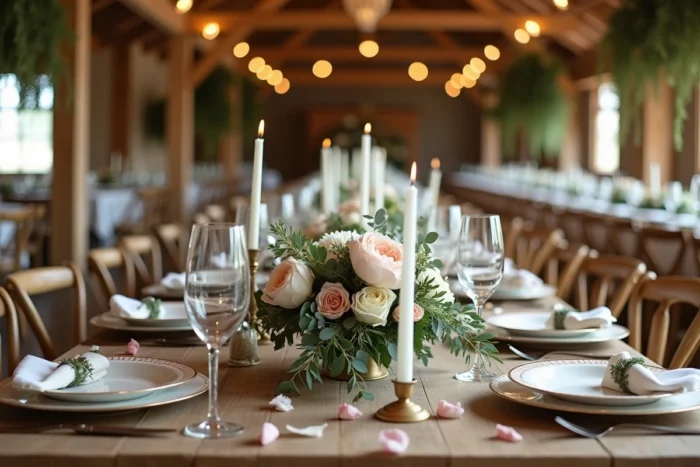
- The single-flower bouquet: one type of flower used in abundance. Peonies, garden roses, or carnations, but in generous quantities and within a narrowed palette. The visual effect is more coherent and often less expensive than a multi-variety arrangement.
- Muted and earthy colors: sage green, pale terracotta, off-white, deep burgundy. Bright or saturated pastel shades (like millennial pink) give way to more matte, organic hues.
- Textile draping is making a strong comeback, combined with mirrors to enlarge the space and play with natural light. This is an effective lever in somewhat dark indoor venues.
The general idea: less variety, more visual coherence. A clear stance yields a stronger result than a mix of styles, even if each individual element would be pretty on its own.

Intimate Wedding or Large Reception: Choosing the Right Format for Your Couple
Specialized sources describe a shift towards medium-sized weddings, around one hundred to two hundred guests. Neither the micro-wedding of the post-pandemic period nor the large reception of three hundred people. A middle ground that allows for a warm atmosphere without blowing the budget per guest.
Why This Format Changes the Logistics
With a contained number of guests, certain choices become possible. You can consider an atypical venue (vineyard, farmhouse, riverside guinguette) that wouldn’t have the capacity to host three hundred people. The caterer can offer a more elaborate menu. Interactions between tables are smoother.
A smaller wedding also allows for greater investment per guest: better meals, quality open bar, thoughtful guest gifts. This calculation appeals to many couples this year.
The Multi-Day Wedding
When the guest list tightens, some couples extend the celebration. A dinner the night before with close ones, the ceremony and party on the big day, a brunch the next day. This “weekend” format enhances conviviality without weighing down the main day. It requires negotiating accommodations at the venue or nearby, which should be planned at least six months in advance.
For guests, this stretched rhythm transforms the wedding into a true getaway. For the couple, it dilutes the pressure of the big day: not everything rests on a single evening.
The common thread of all these trends remains the same: making clear choices rather than trying to check every box. A successful wedding in 2026 is not one that accumulates services; it is one where each budget item has been chosen with awareness, based on what truly matters to the couple and their loved ones.