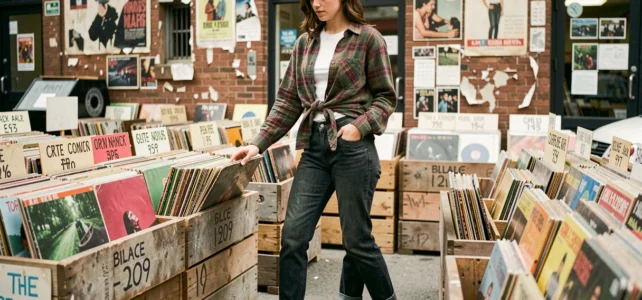
When rummaging through a thrift store in 2026, the items that sell the fastest are often stamped from the mid-90s. Baggy jeans, plaid flannels, chunky sneakers, band t-shirts: the wardrobe of 1994 hasn’t just aged; it has been absorbed by the second-hand market and current collections. This resurgence is not a coincidence. It is based on very concrete cultural, economic, and regulatory mechanisms.
ESPR Regulation and Archive Stocks: Why 1994 Pieces Are Still Circulating
Since July 19, 2026, large fashion companies in the European Union are no longer allowed to destroy unsold clothing, accessories, and shoes. The ESPR regulation (Ecodesign for Sustainable Products Regulation, EU 2024/1781) applies to companies with more than 250 employees generating over 50 million euros in revenue. They must prioritize resale, donation, or preparation for reuse.
Read also : Discover the fortune and background of Roger Erhart: career and salary revealed
In practice, archive stocks from the 90s are being reintroduced into circulation instead of being destroyed. Deadstock items from 1994, never worn, are appearing in alternative markets and refurbishment circuits. Thus, one can find models of sneakers, cuts of jeans, or period denim jackets in almost new condition, with prices varying according to rarity.
To understand the style of 1994 and its culture, one must grasp how much this year concentrated contradictory influences. The grunge of Seattle coexisted with the nascent britpop, American streetwear responded to European sportswear, and the college fashion from TV series dictated the purchases of young people.
Read also : Style Tips: How to Stay Elegant and Feminine at 75
Grunge, Britpop, and Pop Culture in 1994: Three Currents, One Wardrobe
The year 1994 is not just about grunge. This era is often reduced to flannels and Dr. Martens, but the actual wardrobe was more fragmented.
Grunge as an Anti-Fashion Uniform
Grunge came from the music scene in Seattle, propelled by bands like Nirvana and Pearl Jam. By 1994, the movement reached a tipping point. Disheveled clothing became a full-fledged dress code: open plaid shirts over a worn t-shirt, faded jeans, dirty sneakers. The message was clear, a rejection of glamour and consumer society.
Britpop and British Sportswear
On the other side of the Atlantic, britpop was redefining the style of young Britons. Parkas, football jerseys worn in the city, and reimagined mod cuts formed a counter-current to American grunge. The britpop style displayed a pride in working-class culture, with sportswear elements repurposed into everyday pieces.
The College Look and the Influence of TV Series
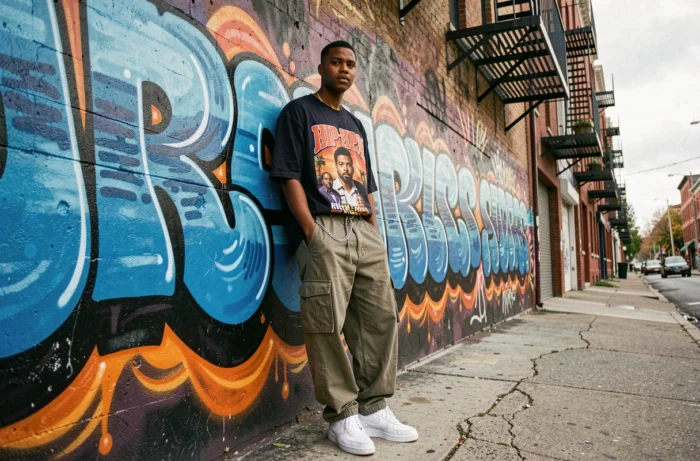
For many young people of the time, the fashion of 1994 came through the screen. The looks from series like Beverly Hills 90210 or Friends defined weekend purchases. Straight jeans, polos, white sneakers, denim jackets: an accessible and replicable wardrobe from mainstream brands. Tommy Hilfiger, Calvin Klein, and Gap dominated this segment.
- Grunge imposed flannel, baggy jeans, and boots, in direct opposition to luxury codes.
- Britpop rehabilitated the parka, repurposed tracksuits, and references to British working-class culture.
- The college style, driven by television, made straight jeans and white sneakers universal among teenagers.
Anemoia Generation: Buying the Nostalgia of an Era Not Lived
The revival of the 1994 style is not just for those who experienced it. Recent analyses describe a “generation anemoia,” a term that denotes the nostalgia felt for a period not personally experienced. This phenomenon extends far beyond fashion to toys, collectibles, and pop culture as a whole.
Buyers born after 2000 are actively seeking pieces from 1994, not out of personal memory, but through aesthetic projection. Period recreation videos on social media, grunge or britpop music compilations, and capsules inspired by 90s graphic design fuel this demand.
Opinions vary on this point: some see this nostalgia as a mere marketing cycle, while others interpret it as a need for grounding in the face of current visual overproduction. What is measurable is the increase in searches related to vintage styles and 90s aesthetics on platforms like Pinterest.
Graphic Design and Music of 1994: A Still Active Visual Legacy
The style of 1994 was not limited to clothing. The graphic design of the time carried the same tensions. Deconstructed typography, deliberately chaotic layouts, and grainy textures from the grunge movement influenced magazines, album covers, and concert posters.
This aesthetic of imperfection is returning in current digital design. There is a resurgence of lo-fi textures, desaturated color palettes, and asymmetrical compositions directly inherited from the visual production of the mid-90s.
In music, 1994 remains a pivotal year. The albums released that year defined entire sub-genres. Whether from American alternative rock or British pop-rock, the band served as a cultural as well as musical vector. Concert t-shirts became full-fledged fashion items, worn well beyond the fan sphere.
- Grunge typography, deliberately dirty and deconstructed, still influences the visual identities of independent brands.
- Album covers from 1994 are being reissued as collectibles, with a vinyl market that shows no signs of weakening.
- The band t-shirt, worn as a style element rather than merchandise, remains a fashion marker directly inherited from that era.
The style of 1994 survives because it was never solely about clothing. It articulated music, design, and attitude into a coherent whole. With the ESPR regulation reintroducing textile archives and a generation anemoia seeking the tangible, the material conditions for this revival are set to last beyond a mere seasonal effect.