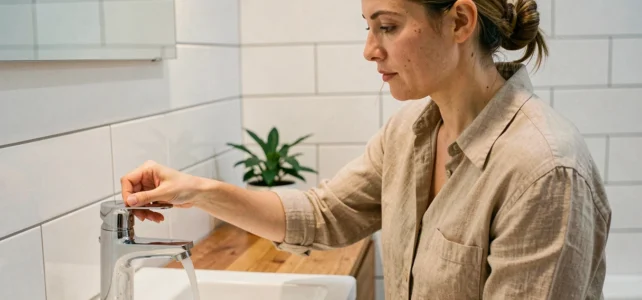
Saving water on a daily basis is not just about turning off a tap: the real lever is also in the energy spent to heat that water, an aspect often overlooked in traditional guides.
Hidden energy of domestic water heating
Reducing water consumption has a double effect that is rarely highlighted. Every liter of hot water requires energy to reach temperature, whether it’s through an electric tank, a gas boiler, or a heat pump.
You may also like : Essential Trends and Tips for Organizing an Unforgettable Wedding This Year
The energy impact of heating sometimes weighs more heavily than the volume of water itself. Lowering the washing temperature of laundry, rinsing dishes in cold water when possible, or shortening the duration of a hot shower simultaneously affects two bills: the water bill and the energy bill.
A concrete action is to set the water heater temperature between 55 and 60 °C instead of letting it rise to the maximum. The savings are not only measured in liters but in kilowatt-hours avoided over the year. Practical resources published on nefablog.fr allow for a deeper exploration of these types of approaches related to domestic sobriety.
Recommended read : Trends and Tips for Organizing an Unforgettable Wedding This Year
Low-flow devices: aerators, showerheads, and dual-flush toilets
Before changing habits, there is a mechanical approach that reduces consumption without conscious effort. Low-flow devices work upstream of each use.
Aerators and flow restrictors on the faucet
An aerator screws onto the end of the faucet and mixes air with the water stream. The flow decreases significantly, but the feeling of pressure remains the same. Installation takes a few seconds and requires no specific tools.
Flow restrictors work on a similar principle by limiting the maximum volume per minute. They can be placed on shower hoses as well as on kitchen faucets.
Water-saving showerhead
A water-saving showerhead reduces flow while maintaining a comfortable spray through micro-perforation or air injection. The shower is the most water-intensive domestic consumption point: acting on this equipment produces an immediate and measurable effect.
Dual-flush toilet
The toilet is another major consumption point. A dual-flush mechanism offers two distinct flushing volumes, allowing for the adjustment of the volume actually needed for each use. The investment remains modest, and installation is accessible without a plumber.
- Aerator on every faucet in the house: reduces flow without noticeable loss of comfort
- Water-saving showerhead in the bathroom: addresses the most water-consuming fixture
- Dual-flush toilet: divides the volume used for common uses
- Leak detection: a dripping faucet can waste several liters per day without anyone noticing
Detecting and repairing leaks remains the most cost-effective action in terms of water savings. A simple test involves checking the meter in the evening and comparing the reading in the morning, without having used any water in the meantime. Any difference indicates a leak that needs to be addressed.
Reuse of non-soapy water at home
Traditional advice focuses on reducing flow. A complementary angle involves reusing certain waters before they are discharged into the system.
Cooled cooking water, vegetable rinsing water, or hot water (the water that runs while waiting for the tap to get hot) can be used to water indoor plants or the garden. This water, untreated chemically and without soap, is perfectly suitable for most plants.
Some washing machines offer a rinse cycle where the outgoing water remains relatively clean. Collecting this water in a basin for outdoor watering helps avoid drawing potable water for a need that does not require it.
Saving water in the garden: watering, mulching, and rainwater harvesting
The garden represents a particularly sensitive consumption point during the summer months when restrictions multiply. Several municipalities now recommend differentiated practices between the inside of the home and the outside.
Evening watering and drip irrigation
Watering at the end of the day limits evaporation due to heat. The drip irrigation system delivers water directly to the base of the plants, with no loss from runoff or dispersion in the air. This system is suitable for both vegetable gardens and ornamental beds.
Mulching and choosing water-efficient plants
Mulching (bark, straw, plant debris) retains soil moisture and reduces the frequency of watering. A layer of a few centimeters is sufficient to significantly slow down evaporation.
Choosing plants suited to the local climate and low in water consumption remains the most structuring decision in the long term. Mediterranean species, ornamental grasses, or certain perennials can withstand prolonged dry periods without additional watering.
Rainwater harvesting
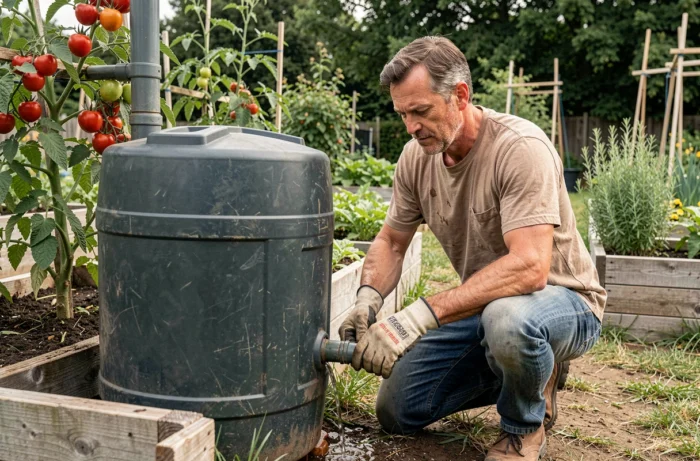
A rainwater collector connected to a downspout collects rainwater for irrigation, outdoor cleaning, or filling a pond. This free and soft water is particularly suitable for plants sensitive to lime.
- Water in the evening or early morning to limit evaporation
- Install drip irrigation in regularly planted areas
- Always mulch around shrubs, hedges, and vegetable gardens
- Favor drought-resistant species when planting new plants
- Place a rainwater collector on every usable downspout
The combination of these practices in the garden can significantly reduce outdoor water consumption, especially during the months of June to September when demand is highest.
The most sustainable water savings rely less on a list of isolated actions than on a comprehensive logic: equipping usage points, reusing before discarding, and adapting the garden to the actual climate rather than an ideal of constant watering. An aerator costing just a few euros on each faucet produces a cumulative effect over the year that most households underestimate.