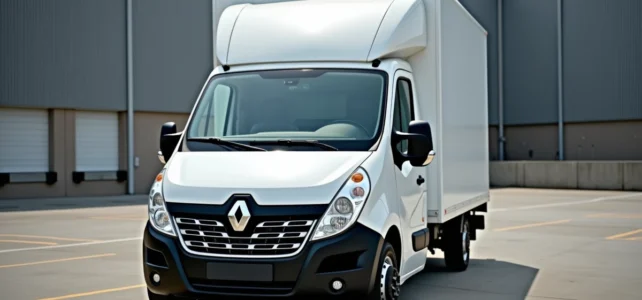
Are you looking for a van where you can stand up, load pallets from the side, and fit under most parking barriers? The Renault Master L2H2 ticks these boxes, provided you know its actual dimensions. Because between the Master III and the Master IV, the figures have changed, sometimes by a few millimeters, sometimes by much more. Here’s what to keep in mind for 2026.
Exterior height of the Master L2H2: why the figure varies by version
The “H2” designation on the technical sheet suggests a unique height. The reality is more nuanced. On the Master IV L2H2 in front-wheel drive van version, Renault’s documentation indicates an exterior height of 2,498 mm. But this figure can rise to 2,808 mm depending on the engine, roof equipment, or the presence of a tailgate.
See also : Everything you need to know about car maintenance, purchasing, and news in Belgium
Have you ever noticed a roof rack or a ducted air conditioning unit on a utility vehicle? Each of these elements adds a few centimeters. The electric E-Tech versions are also slightly taller, due to the battery pack integrated into the chassis and adapted suspensions.
The consequence is direct: a parking garage limited to 2.50 m can become inaccessible for certain configurations. Before signing a rental contract or an order form, you need to check the exact height listed on the technical sheet of the configured vehicle, not that of the base version. To better understand the dimensions and height of the Renault Master L2H2, you need to distinguish the catalog measurement from the actual measurement once the vehicle is equipped.
Recommended read : Everything You Need to Know About Tie Dimensions and Sizes to Make the Right Choice
Side door and rear doors: the dimensions that affect loading
The length and height of the van attract all the attention. The openings, however, are often overlooked. Yet it is through the door that everything passes, or gets stuck.
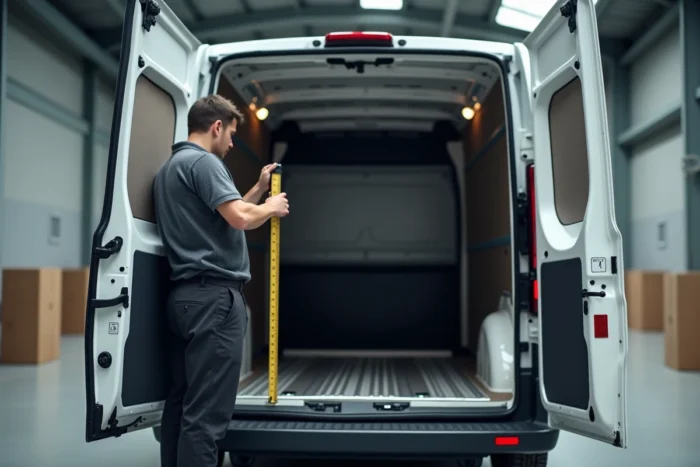
On the Master IV L2H2, Renault announces a side door width of 1,312 mm, presented as the best in its category. For a tradesperson loading furniture or drywall from the side, these extra centimeters make a difference.
On the rear doors, the opening height reaches 1,754 mm, with a loading threshold located 571 mm from the ground. This threshold is a practical reference often neglected: it determines the physical effort required daily and compatibility with a pallet jack or hand truck.
- Side door width: 1,312 mm, compatible with most euro pallets loaded from the side
- Rear opening height: 1,754 mm, sufficient for large furniture or appliances
- Loading threshold height: 571 mm, a compromise between ground clearance and loading ergonomics
These three values form a trio to check together. A generous useful height is useless if the rear door does not allow the load to pass.
Interior useful height of the Master L2H2: what 1,885 mm really means
The interior useful height of the Master IV L2H2 is stated as 1,885 mm in Renault’s documentation. For a person measuring 1.80 m, this allows them to stand upright without ducking, provided they are not wearing thick safety shoes.
Why does this figure deserve a critical look? Because it corresponds to the bare cell. As soon as a fitting is installed (insulated floor, ceiling storage unit, integrated lighting), the height actually available decreases. A quality insulated floor consumes between 30 and 50 mm. A false ceiling to run electrical ducts takes up just as much.
A converted van in Master L2H2 rarely offers more than 1,780 mm of free height. This is not a flaw of the vehicle, but a parameter to integrate from the design of the layout plan. If you aim for a camper or mobile workshop use, design your layout starting from this reduced height, not from the catalog measurement.
Wheelbase and useful length: the gain of the Master IV over the Master III
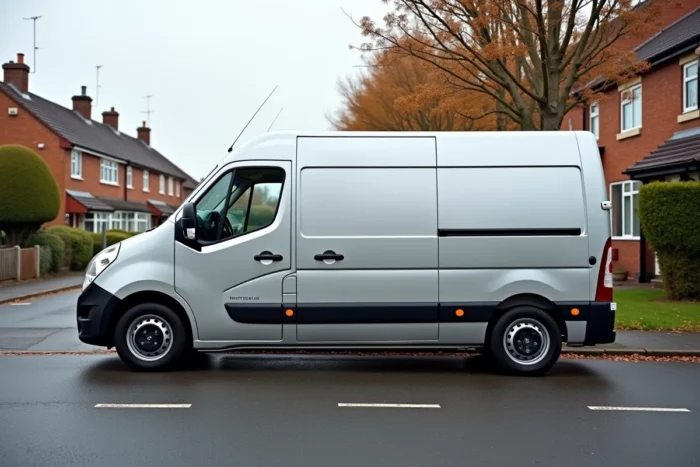
The transition from Master III to Master IV has modified the wheelbase. It is shorter on the new generation, which improves the turning radius and maneuverability in the city. The paradox: despite this reduced wheelbase, the interior useful length gains 142 mm compared to the Master III.
This gain comes from an optimization of the structure. The walls are thinner, and the wheel arch encroaches less on the loading volume. For a transporter, an additional 142 mm can represent an extra row of packages along the entire length of the floor.
Loading volume and GVW of the L2H2
The useful volume of the Master L2H2 directly depends on these interior dimensions. The payload ranges from 1,200 kg to 1,600 kg depending on the engine and the GVW chosen (3.3 t or 3.5 t). The choice of engine not only affects power: it modifies the empty weight, and therefore what remains for loading.
- GVW 3.3 t: more limited payload, but sufficient for a B license in most cases
- GVW 3.5 t: higher loading capacity, still accessible with a B license
- E-Tech electric version: heavier battery, reduced payload compared to the equivalent diesel
A well-sized van is not just about its volume. It is the balance between useful length, free height, and permissible load that determines whether the vehicle is truly suitable for a given profession.
Check the dimensions before purchase: common pitfalls with the Master L2H2
Online technical sheets sometimes display values that correspond to another generation or configuration. A Master III L2H2 and a Master IV L2H2 do not share the same dimensions, even if the commercial designation is identical.
Before finalizing a purchase or a fitting, request the complete technical sheet of the exact vehicle you are targeting: generation, engine, GVW, roof options. The exterior height, useful height, and opening dimensions vary from one configuration to another. A discrepancy of a few centimeters on paper can translate into a pallet that does not fit or a parking area that has become inaccessible.